

Hydrofracturing
|
Hydrofracturing
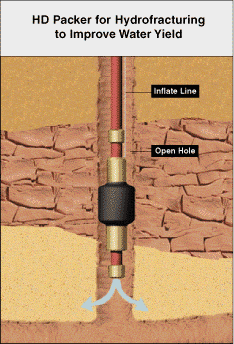
IntroductionHydrofracturing is only used in bedrock formations and is a water well development process that involves injecting large volumes of water under high pressure through the well into the bedrock formation immediately surrounding it. The desired result of this well "stimulation" is to widen existing fractures in the bedrock and/or extend them further into the formation. By enlarging the network of water bearing fractures supplying water to the well, it is hoped to realize an increase in the water production. Hydrofracturing can be a cost effective means of increasing the yield of newly drilled wells with insufficient production rates or for existing older wells with production rates that have progressively become lower due to mineralization of existing bedrock fractures.HistoryOriginally developed for use in the oil industry, hydrofracturing is relatively new to the drinking water well industry. Due to its more controllable process, hydrofracturing is now the preferred method of many contractors for developing bedrock. Compared to older methods of increasing well production (blasting with dynamite or application of dry ice to capped wells), hydrofracturing offers more benefits with less risk of well failure.ProcessAfter removing all piping and pumps from the well, the procedure begins by lowering an inflatable hard rubber packer into the wellbore. In the bedrock, the packer is set a minimum of 20' below the end of the casing and 60' below the surface of the ground to prevent the pressurized water from breaking through the ground surface and to avoid surface water and contaminants entering the well. After placement, the packer is inflated, thereby sealing off the section of the well below and high pressure water is pumped through the packer into the bedrock. Hydrofracturing procedures usually require between 500 and 2000 pounds per square inch (psi) pressure though in some cases up to 3000 psi may be necessary to achieve adequate penetration into the bedrock formation. As the rock formation resists the flow of the pressurized water, the pressure within the sealed-off section of the well will rise. It is this focused pressure that can force fissures in the bedrock to widen and elongate and wash out sediment in the fractures. If the bedrock yields and the pressurized water finds its way into these small cracks, the pressure will suddenly drop off. This generally means that the bedrock is accepting water and is ready to proceed to the next step. Once the pressure has dropped off, water is pumped into the formation at a rate of 25 to 60 gpm. Up to1200 gallons of water will be pumped into the formation in an effort to remove mineral deposits and debris that can be forced into the bedrock from the pressurizing procedure. Only clean, disinfected water is used for injection due to the extreme pressures involved and the potential for forcing contaminants into the aquifer. Successful hydrofracturing procedures are usually indicated by a sudden drop in the pressure combined with increased flow of pumped water into the formation. Additionally, a strong backflow of cloudy water when the pressure is released represents success as that reflects the removal of the sand, rocks, mineral deposits, and other debris that previously occupied the newly-opened cracks and fissures. A complete hydrofracturing procedure may require deflating and lowering the packer deeper into the wellbore a number of times. At each stage, the entire pressurization and injection process is repeated.Yield TestingWhen successful, hydrofracturing can produce modest well yield increases. However, depending on the original yield of the well, a modestly increased yield may represent a significant increase if the original yield was very low. A typical well yield rate after hydrofracturing is 1/2 to 5 gallons per minute, although occasionally large increases in well recovery rates are realized. Due to geologic conditions, in some instances hydrofracturing will not increase well yield. Yield tests can be performed after a hydrofracturing procedure to gauge the effectiveness of the process. Test pumping is usually 20 hours or more depending on if the water is clean.SummaryThough there is no way to predict exactly what the outcome will be, Jelinek Well Drilling, Inc. has generally had success in our service area with hydrofracturing and will recommend it to well owners that suffer from inadequate water yield or from reduced well recovery due to a gradual "tightening" of the bedrock aquifer through the years. Please contact us to schedule a consultation regarding your low-yield well. |

Disclaimer: All information is deemed reliable but not guaranteed and should be independently verified.
Jelinek Well Drilling and By Request Web Designs shall not be held liable for any typographical errors, misinformation, or misprints.
Site Design By